THE Rohe EDIT
The low-effort nighttime routine for better mornings

A good morning rarely starts in the morning. It starts the night before, with a handful of small decisions made on autopilot. The goal is not a complicated ritual — it is a short, repeatable sequence that removes friction from the hours ahead. Done consistently, it costs almost no time. Done inconsistently, the difference is noticeable.
Prepare the room
The environment you sleep in shapes how easily you fall asleep and how rested you feel when you wake. A few minutes before bed, lower the lights, set the temperature to the cooler end of comfortable, and remove anything from the bed that does not belong there. These are not wellness prescriptions — they are simple conditions that most people sleep better in. The room does not need to be perfect. It needs to be ready.
Cleanse and apply skincare
Cleansing before bed removes the day: sunscreen, pollution, sebum, and anything else that has accumulated on the skin. What you apply afterwards is a personal decision based on your skin and what works for it. The main thing is doing it consistently, in the same order, so it becomes automatic rather than effortful. A routine you actually follow every night is more useful than an elaborate one you follow occasionally.
Protect your hair with low tension
Sleeping with hair loose and unprotected can lead to tangles, breakage at the hairline, and friction against rough fabric. A loose braid, a soft scrunchie, or a low bun reduces mechanical stress on the hair overnight without requiring much effort. The key word is low tension — anything tight enough to pull at the scalp is counterproductive. The aim is simply to keep hair contained and reduce unnecessary friction while you sleep.
Use a smooth, clean pillowcase
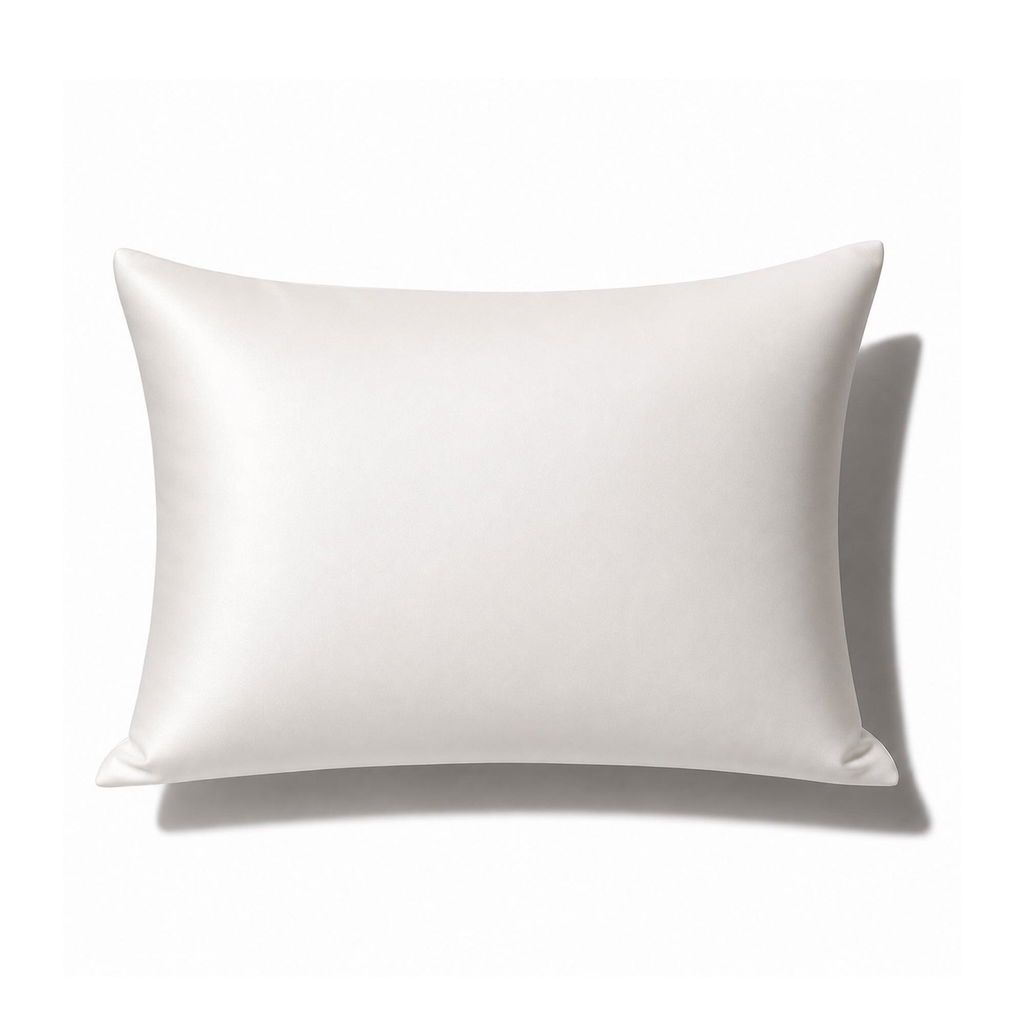
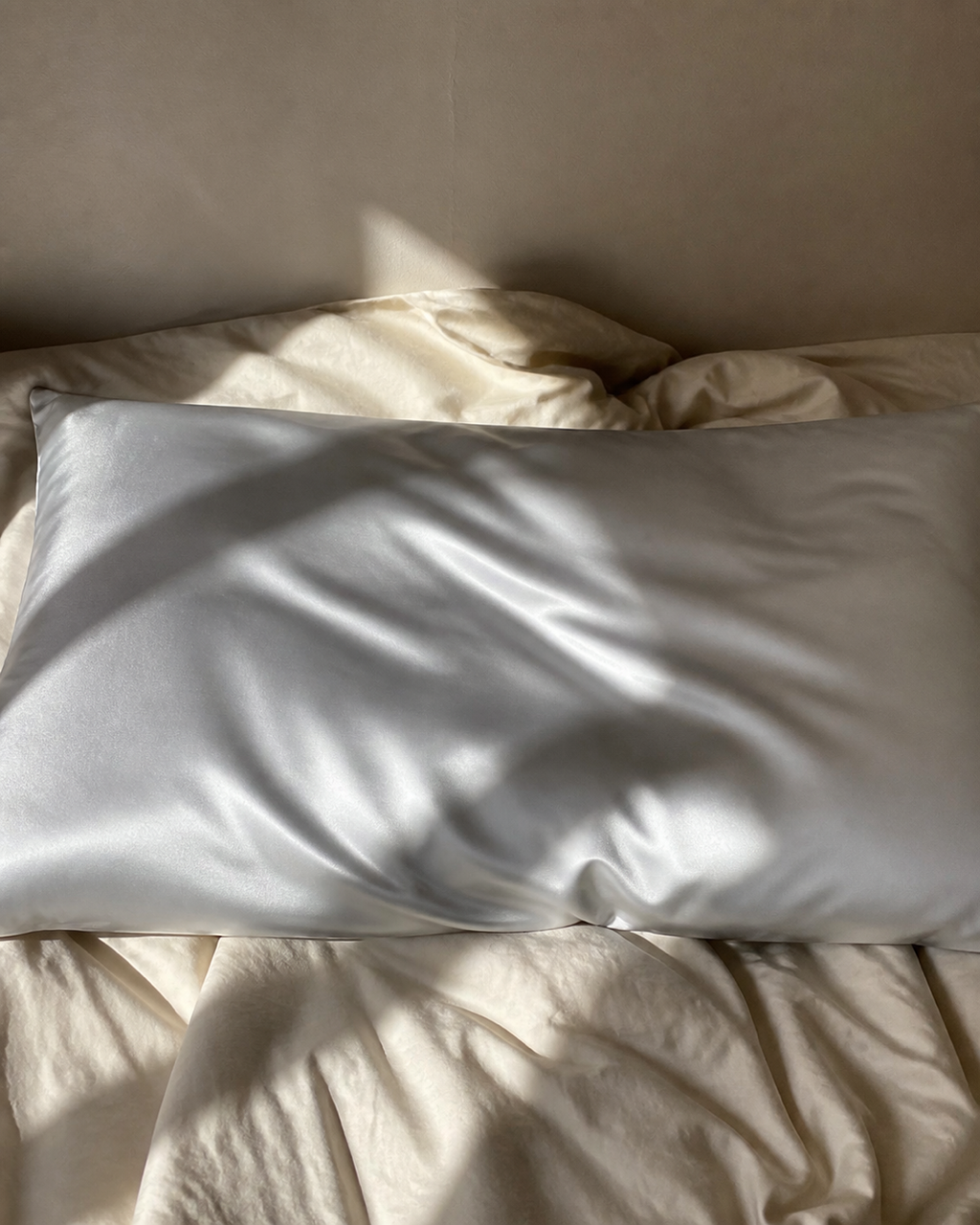
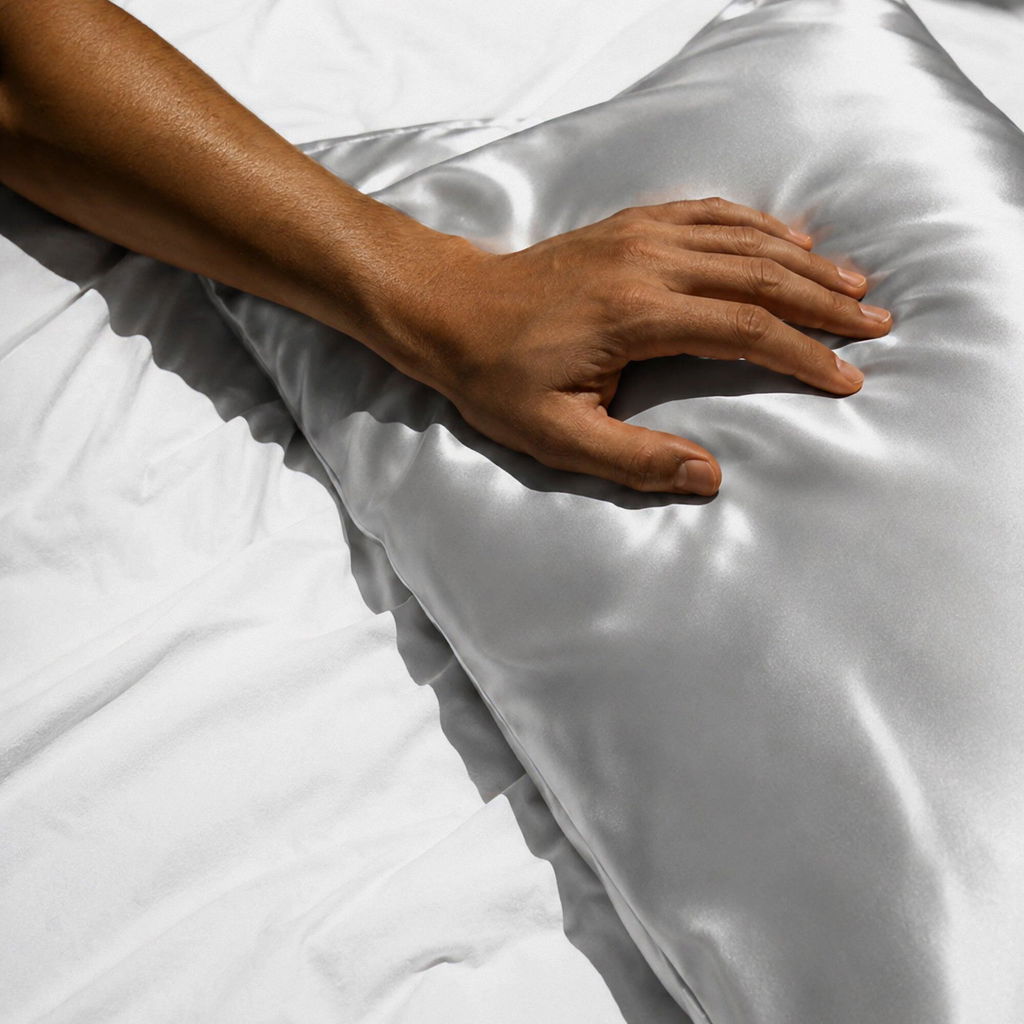
The surface your face and hair rest against for several hours matters more than it might seem. A smooth fabric — one with a tight, fine weave — creates less friction than a coarser one. A clean pillowcase means you are not reintroducing yesterday's residue to freshly cleansed skin. Neither of these things requires a significant investment of time. Changing your pillowcase regularly and choosing a fabric with a smooth finish are two of the lowest-effort adjustments in a nighttime routine.
Keep water nearby
Waking up thirsty and having to get up to find water is a small disruption, but it is an avoidable one. A glass of water on the bedside table costs nothing and removes one reason to fully wake up in the night. It is also there when you wake in the morning, before you have made it to the kitchen. Small frictions, removed in advance, add up.
Set up an easier morning reset
Before you sleep, spend two minutes on tomorrow. Put out what you need in the morning — clothes, bag, anything with a deadline. Clear the surface you will use first. If there is a task you have been avoiding, write it down so it is not occupying background space in your mind overnight. None of this is productivity advice. It is simply the observation that a morning with fewer decisions to make tends to start more smoothly than one that begins with searching and choosing under time pressure.